

Forschung
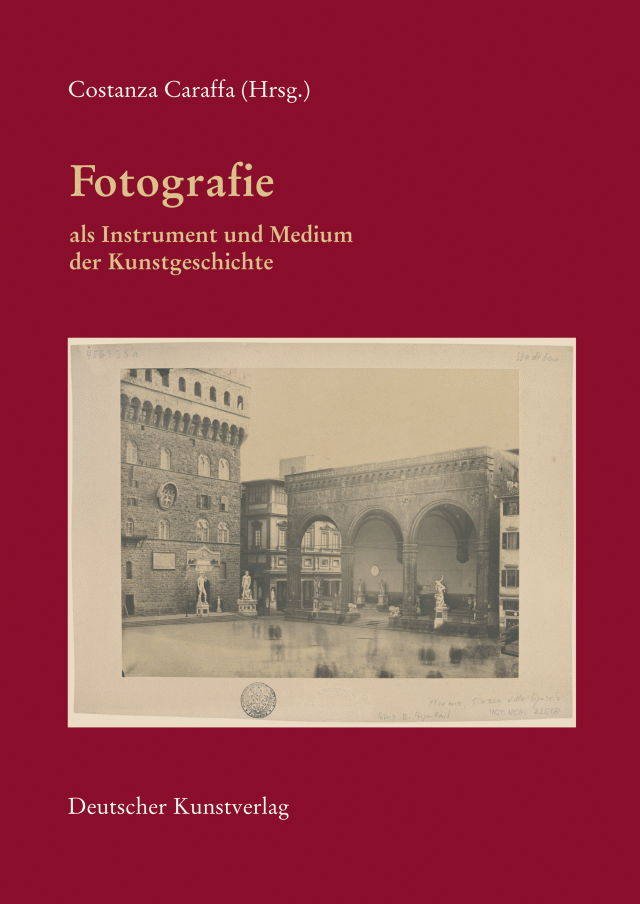
Fotografie als Instrument und Medium der Kunstgeschichte
Costanza Caraffa, Ute Dercks, Almut Goldhahn
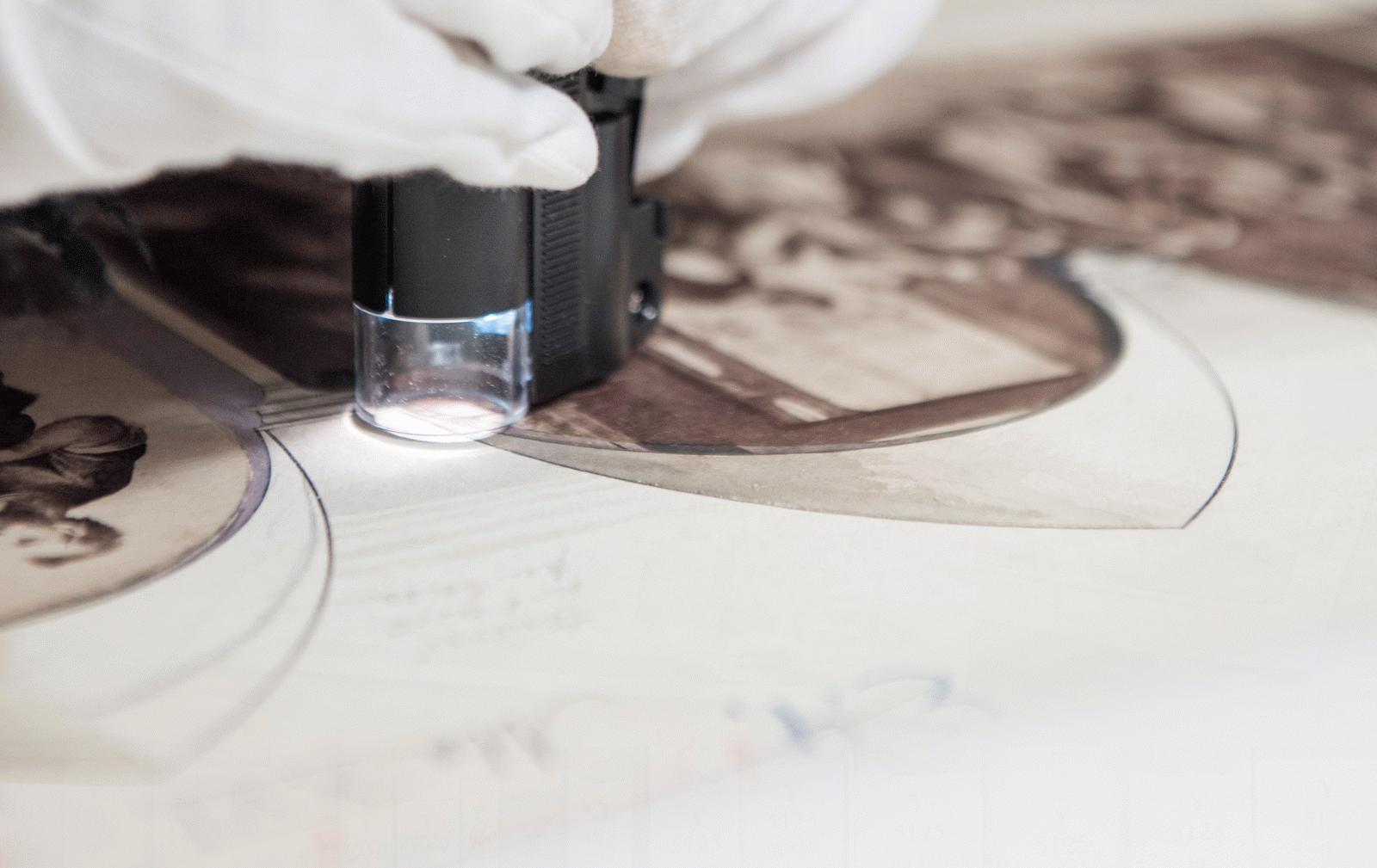
Historische Fotosammlungen, die zu kunsthistorischen Dokumentationszwecken angelegt wurden, bilden beispielhaft die methodische und inhaltliche Geschichte des Faches ab. Von dieser Erkenntnis ausgehend hat die Photothek des Kunsthistorischen Instituts in Florenz in den letzten Jahren einen Paradigmenwechsel - von der reinen Dokumentation zur wissenschaftlichen Auseinandersetzung mit den Fotografien - auf internationaler Ebene mitinitiiert und begleitet. Die fachgeschichtliche Perspektive ist mit einem materiellen Ansatz verbunden, der Fotografien als dreidimensionale Objekte betrachtet, die in einer zeitlichen und räumlichen Dimension und in sozialen Kontexten existieren. Sie sind nicht nur Instrumente, sondern auch eigenständige Gegenstände der Forschung. Dieser Ansatz, der insbesondere auf Studien von Elizabeth Edwards und Joan M. Schwartz zurückgeht, erlaubt die Überwindung des rein funktionalen Verständnisses von Fotografien als zweidimensionale Verweise auf das dargestellte (Kunst)objekt. Der Fokus auf das Archiv als dynamischen Corpus und Ort der Forschung und Begegnung leitet die Aufmerksamkeit auf die involvierten Akteure: Archivare, Wissenschaftler und Mitarbeiter prägen die Sammlung und die Archivstrukturen (Terry Cook) und damit die potentiellen Bedeutungen der Fotografien. Die Untersuchung der eigenen Bestände und Archivstrukturen versteht sich als Beitrag und Anregung zu einem breiteren Diskurs über das wissenschaftliche Arbeiten in und an Fotoarchiven. Die Forschung konzentriert sich auf das Klassifikationssystem der Photothek und insbesondere auf die Rolle Ulrich Middeldorfs. Als Akteure sind auch die vielen Persönlichkeiten und Kenner der Kunstgeschichte zu verstehen, die in der Photothek ihre Spuren hinterlassen haben. Ihre Zuschreibungen und Vermerke auf den Trägerkartons der Fotografien stellen bedeutende Quellen der Fachgeschichte dar. Vor allem durch Schenkungen und Nachlässe haben einzelne Spezialisten wie Hermann Ulmann, Cornel von Fabriczy, Friedrich Kriegbaum, Richard Offner oder Robert Oertel wesentlich zum heutigen Profil der Sammlung beigetragen. Durch die Kontextualisierung der jeweiligen Konvolute und durch Einbeziehung der Dokumente des Institutsarchivs werden Erkenntnisse über die individuellen Arbeitsweisen gewonnen. Diese Fallstudien ermöglichen gleichzeitig tiefere Einsichten in die Institutsgeschichte wie auch in die Prozesse der Archivbildung.
Ute Dercks: Ulrich Middeldorf Prior to Emigration – The Photothek of the Kunsthistorisches Institut in Florenz (1928–1935)
In: Exiles and Émigrés, Libraries and Image Collections: the Intellectual Legacy, edited by Jaś Elsner and Clare Hills-Nova, Art Libraries Journal vol. 38, n. 4 (2013), pp. 29–36
Ute Dercks: "And because the use of the photographic device is impossible without a proper card catalog. . . ." The Typological-Stylistic Arrangement and the Subject Cross-Reference Index of the KHI's Photothek between 1897 and the 1930s
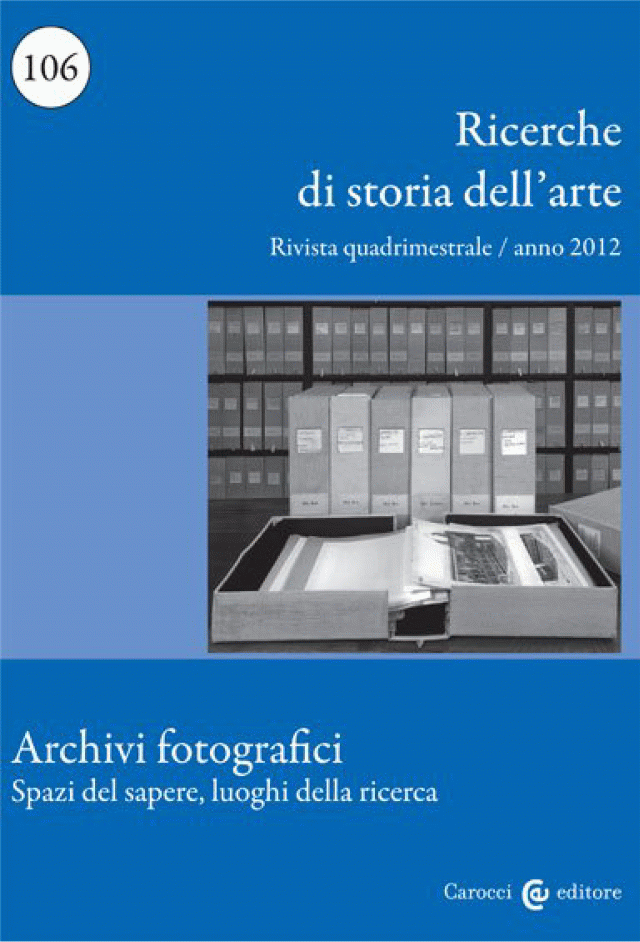
In: Classifying Content. Photographic Collections and Theories of Thematic Ordering, edited by Chiara Franceschini and Katia Mazzucco, Visual Resources, Volume 30, Issue 3, September 2014, pp. 181–200
Ute Dercks und Almut Goldhahn: "Wer ist nun der so geschickt berechnende Meister?". Media e strumenti della connoisseurship dei primi del novecento al Kunsthistorisches Institut in Florenz
In: I conoscitori tedeschi tra Otto e Novecento, Tagungsakten Florenz 2013, hrsg. von Francesco Caglioti, Andrea De Marchi und Alessandro Nova, Mailand 2018, pp. 113–126
Weitere Informationen
Publikation
Fotografie als Instrument und Medium der Kunstgeschichte
hrsg. von Costanza Caraffa
Deutscher Kunstverlag, Berlin [u.a.] 2009
I mandorli, 9
ISBN 978-3-422-06860-5