


Oliver Aas M.A.
Doktorand
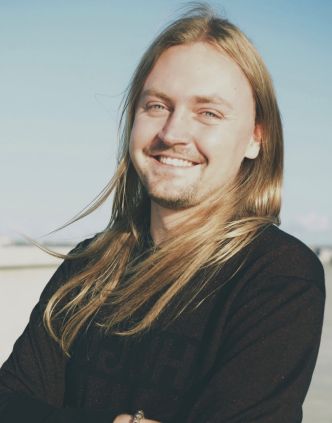
Oliver is a PhD candidate at Cornell University (Ithaca, New York). His dissertation project “Arctic Formlessness” is situated at the intersection of environmental thought, literary theory and art history. Taking the Arctic melt as its starting point, the dissertation argues that contrary to the obsession of form that has circumscribed the last twenty years, the key epistemological concept for understanding the natural world is now formlessness—be it the melting poles, nuclearity, toxicity, or different forms of imperceptible environmental contamination. Focusing specifically on the (post)-Cold-War figure of the Arctic, the project analyzes artists and writers who (at times unknowingly) created a “language” of formlessness that placed the polar regions at the nexus of art, commerce, culture, science, politics and the environment. Oliver holds a BA from University College Maastricht (honors) and an MA from Central European University (summa cum laude).
- Environmental art and philosophy (esp. philosophies of the elements)
- Landscape studies (photography, painting, literature, philosophy)
- Theories of form (esp. containment and absorption)
- Text and image relationship
- Literary theory (esp. deconstruction, psychoanalysis, Frankfurt School)
- Theories of comparison in literature and arts
- Cold War cultures and artistic production
- Eastern European art and historiography (esp. Baltic; post-Soviet; and Stalinist)
- Encounters between “Eastern” European and “Western” art and culture
- Soviet architecture and conceptual thinking on space